The situation
The platform I inherited had been built by transcription: the flagship client described their process, and the previous owner digitised it, screen by screen. Nobody asked what problems the users were solving with that process or which of those problems a platform could solve better. The result was a workflow tool that one organisation could use and nobody else would pay for. Since taking over, we now have four GPs who have committed to trials on live deals. The page outlines the reasoning that took it there.
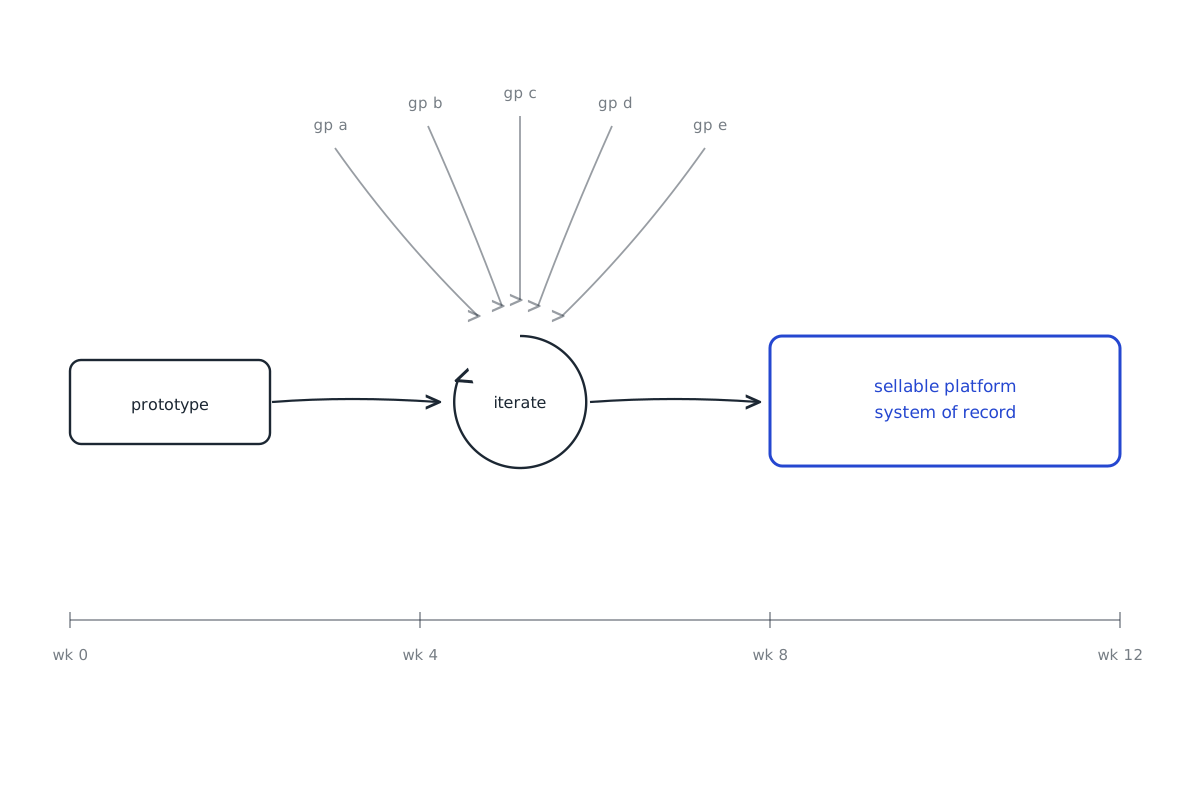
Mapping the process, not the client
We started with understanding the real co-invest raising process. We mapped what we knew and then filled the holes by gathering information from across the market. This allowed us to start to understand how it differs between a huge, mature organisation and a smaller GP. Those gaps became the product's foundation: features that work across both became core features and the rest was treated as configuration.
One feature, two verdicts
In-platform messaging was a feature that split GPs. Our flagship client was a hard no - easier communication meant more questions. However, smaller GPs loved it, for them LP questions were a scattered, unmanaged mess, and one organised channel was exactly what they needed. This highlighted the duality of what we were selling but it allowed us to uncover a core theme of the product: GPs weren't going to buy a platform that told them how to do their processes, they needed one that was flexible enough to make their own.
Getting those verdicts at all was its own decision: I paired with our GTM lead as one unit - every feature entering the prototype tied to the problem it solved, every demo framed to gather the next round of evidence.
The integrations line
Integrations with CRMs and deal-trackers were a non-negotiable for GPs during the research gathering phase. From the sales POV, they show technical ability and feel like bespoke service so we understood their importance. However, they're also where implementation complexity and time compounds fastest, and we'd learned that the hard way with our first implementation. So we set a rule: no new integrations for trial clients. If a client is paying, we integrate but if they're trialling, the product has to win on what it is.