The situation
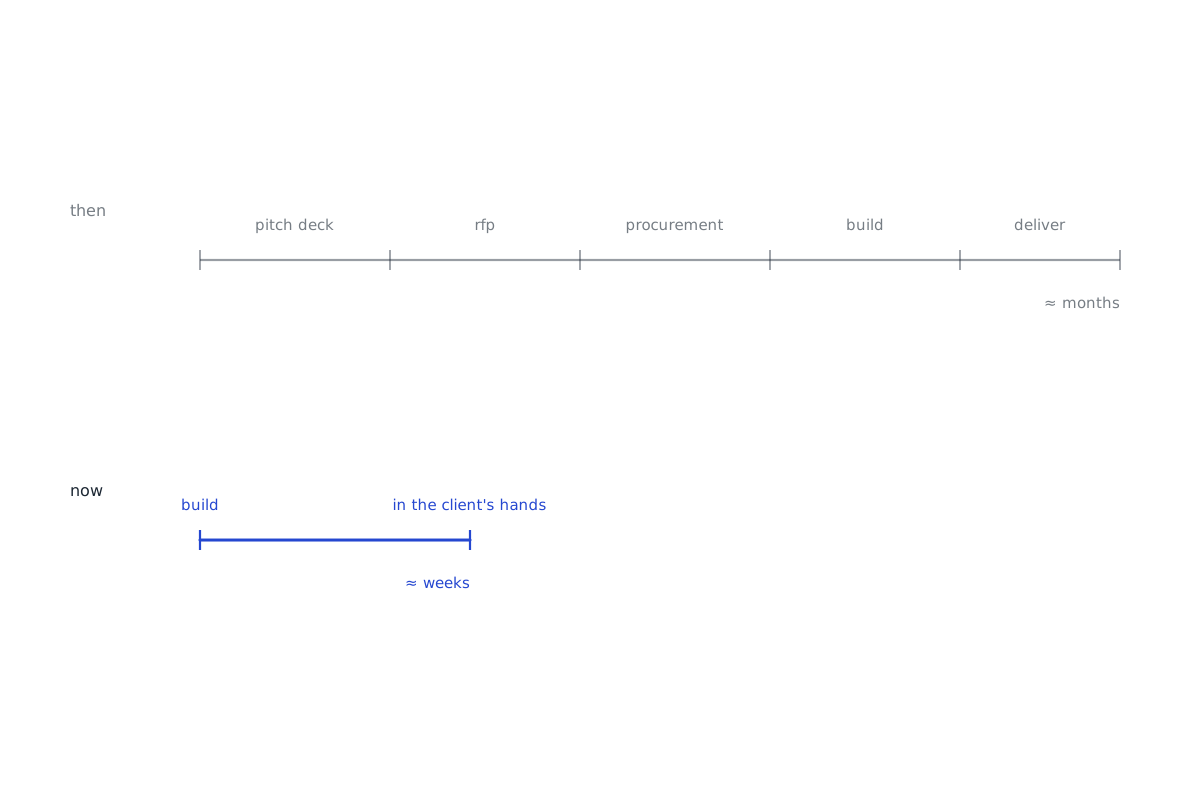
We were invited into an RFP for a virtual data room - before we had a data room to show. I'd just taken over the Pre-Trade squad, and this landed as priority one. The reframed prototype was demoed inside two weeks and is now integrated into the product suite; what follows is why we didn't build quite what was asked, told through three decisions.
Reframing the brief
As we started sketching the requirements of a data room, we found we were recreating something that established providers already do well and data rooms are straightforward enough that parity felt like a losing game. When we got in touch with clients and friendly prospects, we found that GPs were actually describing an integrated workflow. This led to us pivoting our prototype into a complete pre-trade experience - fund creation, marketing, data room, access, analytics. We decided that it needed to be modular enough to stand alone as a product but also integrate into our existing product suite.
Drawing the scope line
Access control had to be well defined because GPs manage who sees what very carefully. However, with short timelines and a bunch of features to build and test we had to make clear prioritisation decisions. We designed a document tagging system to allow document sharing across LPs in the data room and then allowed GP users to restrict into user-level permissions, this was a departure from what they were used to. We felt that the prototype's job was to prove the reframe, not exhaust the spec.
Handing over at production standard
This wasn't just a demo over Zoom, this prototype was going into the client's hands, and GPs managing billions expect bespoke service, not a staging link with shared credentials. We hosted it behind real Cloudflare authorisation and linked logins to auditing and engagement data. This allowed them to see how their own actions were being tracked and how those same user analytics would drive decisions when using the data room with their own clients.